
SPANISH IN FIGURES
Spanish as foreign language acquires a greater importance worldwide every day. Statistics show that Spanish is the third most spoken native language in the world, after Mandarin Chinese and Hindi, and the second most used of the UN’s official languages.
Spanish is also the fourth most spoken language in the world, if all levels of language proficiency are included, behind only English, Mandarin Chinese, and Hindi.
Spanish is the official language in 21 countries and one of the official languages of the European Union, UNESCO, GATT, MERCOSUR and many other international organisations.
According to the Cervantes Institute Yearbook of 2025: “EL ESPAÑOL EN EL MUNDO 2025”, the Spanish-speaking community is already more than 635 million potential users worldwide (specifically, 635.743.644), including native speakers, limited speakers, and students of Spanish as a foreign language, of which more than 519 million are native speakers. Only in the United States there are more than 45 million Spanish-speaking natives.

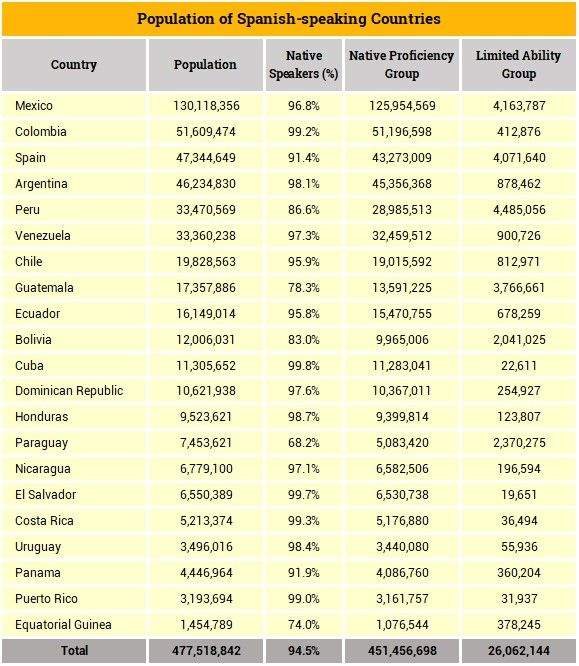
In 2025, 7.7% of the world population is Spanish speaker (those more than 635 million of potential users of Spanish listed above).
The number of Spanish speakers will continue to grow in the coming five decades, but its relative weight will decrease progressively between now and the end of the century. Forecasts estimate that, by 2100, this figure will stand at 6.3%, mainly due to the declining population of Spanish-speaking countries.
By 2060, there will be 111 million Hispanics spread across the country. That will mean that 27.5% of the U.S. population, almost one in three residents of the United States, will be Hispanic, being the second Spanish-speaking country in the world, after Mexico.
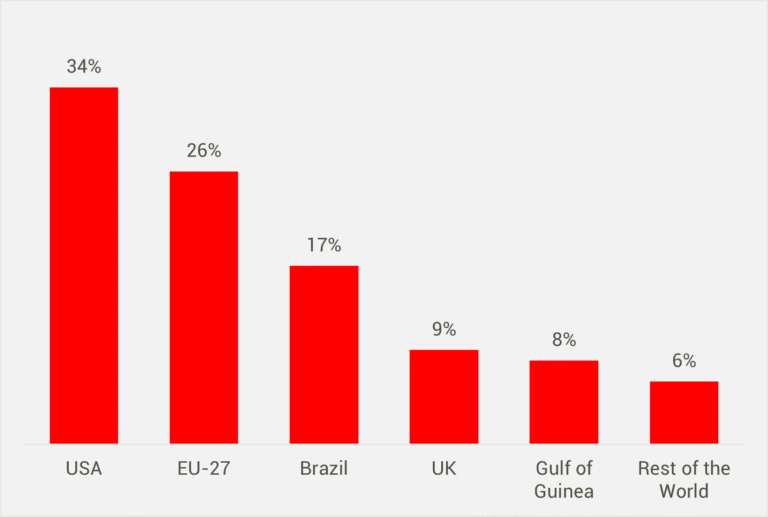
It is estimated that, in 2025, more than 24.5 million students were studying Spanish as a foreign language; specifically, 24.560.143. This is the result of adding up the number of Spanish language students its main areas of influence: mostly from the United States, Brazil, and the European Union, but also from ountries in Africa, Asia, and Oceania.
The figures refer to all levels of education, including formal education (primary, secondary, and university), as well as other non-formal educational settings such as language centers or the classrooms of the Instituto Cervantes worldwide. However, the lack of universal, complete, and comparable data gives the calculations a provisional character, since, for example, they barely reflect information from private schools. Therefore, it is estimated that there is a considerable number of students of Spanish who have not yet been counted.
WHY DO PEOPLE CHOOSE TO STUDY SPANISH?
The Instituto Cervantes highlights in its report that in recent years there has been an increase in the number of students of Spanish as a foreign language. This is because the Spanish-speaking community is constantly growing, with Spanish becoming an increasingly popular language, especially since the last 30 years. This increase is also due, to a large extent, to the increase of commercial exchanges between Spanish-speaking countries and the rest of the world.
In the European Union, the proportion of students of Spanish in primary and secondary education has increased steadily in recent years, while the proportion that that of French and German has decreased.
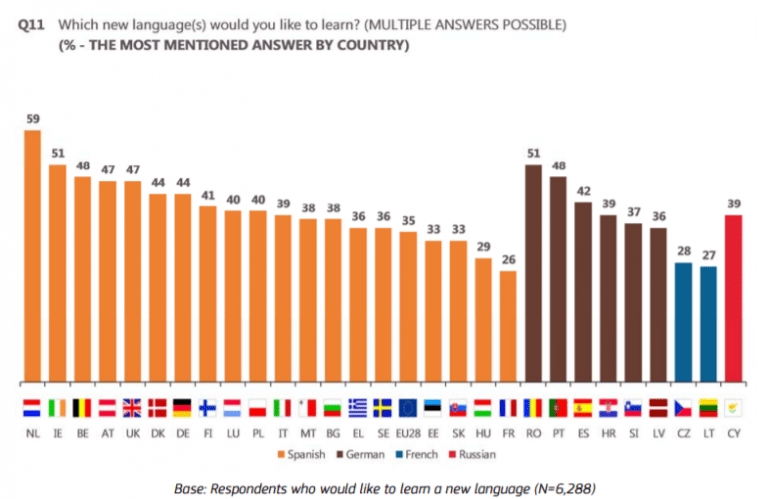
Based on a survey of the European Commission, carried out among young people aged 15 to 30 in all 28 Member States: Spanish is the language of most interest in Europe. According to data extracted from the Flash Eurobarometer 466, published in May 2018, students in most European countries are interested in starting to learn Spanish; specifically, 35% of those who responded to the survey.
In the main Anglophone countries, Spanish is considered one of the most important foreign languages. In the United States, Spanish is by far the most studied language at all levels of education. In the UK, Spanish is perceived as the most important language for the future, even after Brexit. In the next decade, the number of students of Spanish will exceed that of French.
It is not surprising, therefore, that speaking Spanish in addition to English is perceived as a considerable economic asset by native English speakers.
Spanish is among the top five languages in the world in number of speakers, in number of countries where it is official, and in geographical extension. Therefore, demography is the first factor on which the economic power of Spanish is based.
Knowledge of foreign languages is a great advantage for job seekers, as many companies do international business. In addition, learning Spanish provides insight and deeper understanding of Spanish and Latin culture and regions where that language plays a vital role in economic life, in its history and customs.
SPANISH ON THE INTERNET AND ON SOCIAL MEDIA
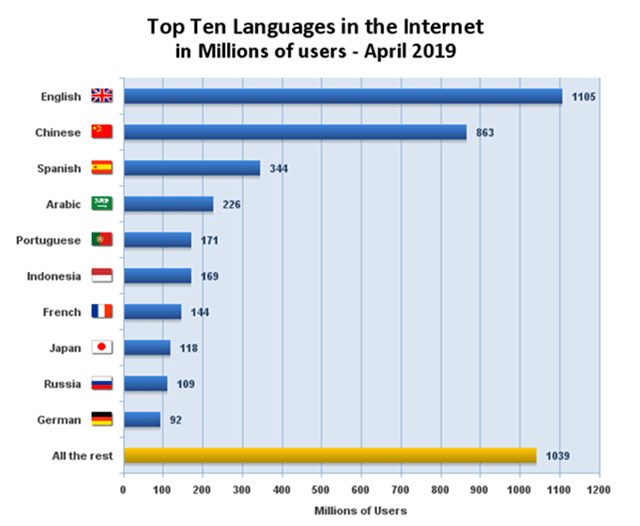
Spanish is the third most used language on the Net. Up to 7.9% of Internet users communicate in Spanish in 2020; specifically, 363,684,593 Spanish speaking people. Only one Spanish-speaking country, Mexico, is among the ten with the highest number of Internet users. Hispanics in the United States prefer to consume and create content in Spanish instead of in English.
Spanish is the second most used language on Facebook, LinkedIn, Twitter and Wikipedia. The number of users of Facebook in Spanish places this language at a great distance from Portuguese and French. The geographic distribution of Spanish-speaking LinkedIn users in the United States suggests that Spanish is being used as a professional asset outside the Spanish-speaking world of this country. Spanish is the second most used language on Twitter in mostly English-speaking cities such as London or New York.
SPANISH, MORE THAN A LANGUAGE
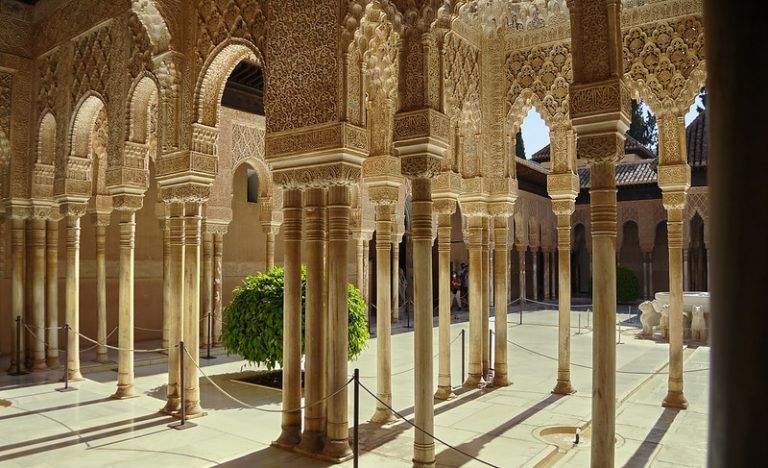
The beautiful tourist attractions, monuments, museums, towns and beaches of both Spain and Latin America, have become much visited by foreigners, mostly non-Spanish speakers. These destinations are chosen not only for their beauty and charm but for their history, art and, especially, for their culture.
The tourists who visit Spanish-speaking countries each year want to be able to interact and experience the local culture. This leads them to become interested in learning Spanish, because they recognise that only by knowing the language of the area visited, they can better understand the culture.

Learning Spanish means immersing yourself in a language that has a long cultural tradition and a promising future. You will be able to go into the world of Spanish and Latin American through relevant authors such as Cervantes, García Márquez, Gustavo Adolfo Bécquer, Isabel Allende; artists such as Picasso, Goya, Velázquez, Frida Kahlo; famous architects such as Antoni Gaudí and Rafael Moneo; and film directors like Alejandro Amenábar, Carlos Saura, Juan Antonio Bayona or Pedro Almodóvar.
Wait no more. Experience our passion!
Once you’ve begun to learn our language and culture, you will not want to stop.